
How solar farms work?
Solar farms use energy from the sun to generate clean, renewable power.
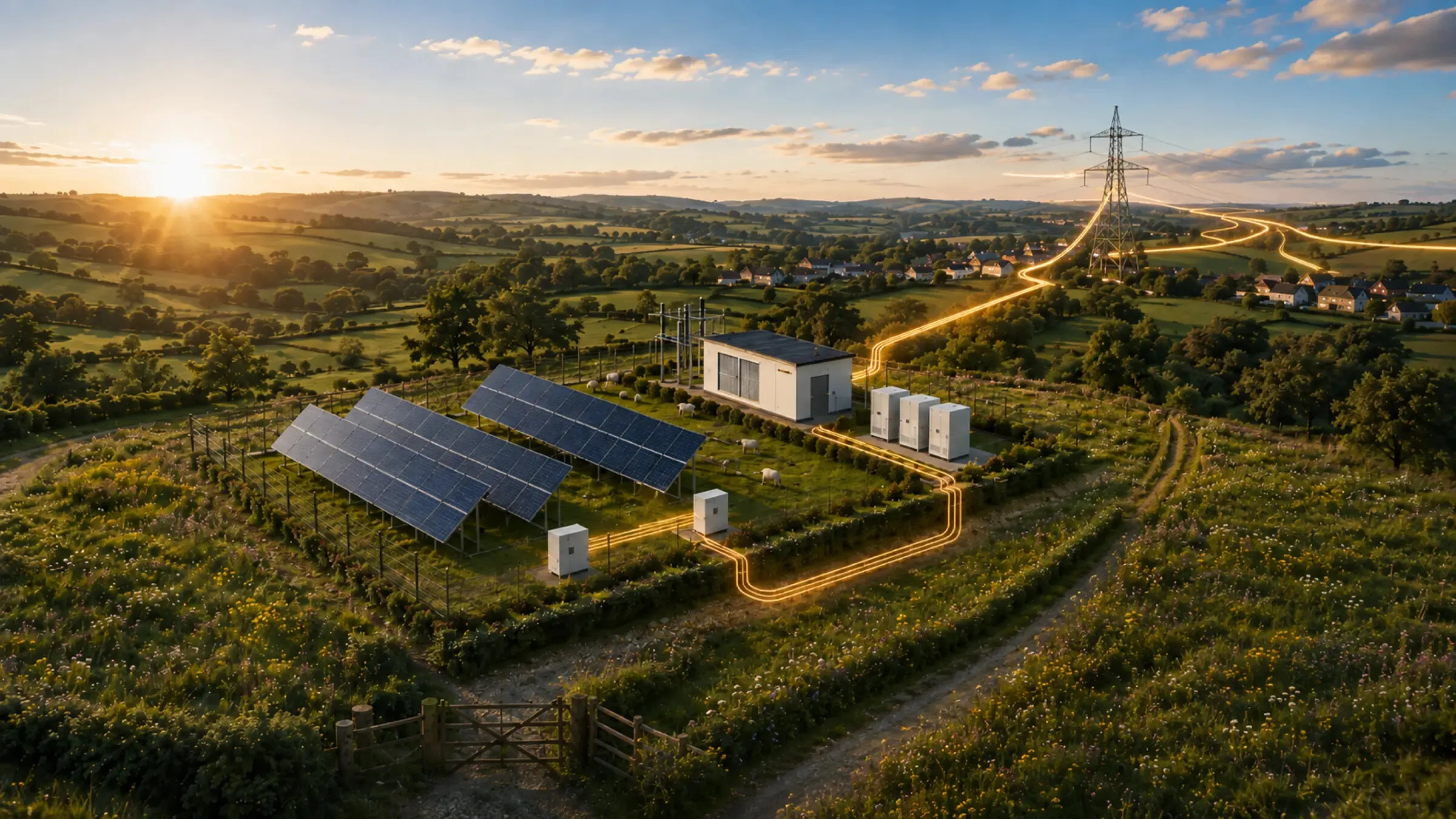
The photovoltaic cells in solar panels convert sunlight into direct current (DC) electricity before inverters turn it into alternating current (AC) electricity. The electricity is then collected at the solar farm substation before it is sent to the grid. Battery storage is an important element of solar farms, as it allows electricity to be stored and provided to the grid when it is most needed (for example during the evening peak).
The different parts of a solar farm are connected by cables, while landscape areas are included to support local wildlife, improve site biodiversity, and provide screening.
Co-locating a data centre campus
One of the major challenges for the UK in attracting data centre investment is the cost of UK power. We are also aware of concerns regarding the impact of data centres on the electricity grid. Co-locating the data centre campus allows some of the electricity generated by the solar farm to be provided at low cost directly to the data centre. This reduces the cost of electricity for the data centre, providing a local supply to meet the data centre requirements and therefore reducing the volume of electricity required from the grid.
- Sunlight
Captured - DC Electricity
Generated - DC to AC
Conversion - Stored or
Supplied - Clean Energy
Delivered
Solar Energy
Sunlight provides the renewable energy source.
Solar Panels
Capture sunlight and generate DC electricity.
Inverter
Converts DC electricity into usable AC power.
Energy Storage
Batteries hold surplus electricity for later use.
Substation
Manages power and prepares it for export.
Cables
Carry electricity between key site components.
Grid Connection
Electricity is either delivered to the data centre campus or exported from the site into the grid.
Fencing
Secures the site and protects equipment.
Landscape Area
Support biodiversity and soften the site visually.